
'The digital trust level has drastically gone up due to Covid, not only in tier-I and II cities, but also in tier-III, IV and V geographies,'

While festive season spends by consumers did contribute to the uptick seen in Q3, experts said greater aggression displayed by retailers to corner a larger share of the shopper's wallet also worked.

For now Walmart has said it remains optimistic about India. But that could change without prior notice, says Nivedita Mookerji.

While the first half of the year saw India's e-commerce market shrinking, the success of Diwali sales will boost the sector beyond last year's benchmark

Nearly 150 companies visited the campus this year.

Startup founders need to sit up and think about how not to take stardom for granted and how not to disappoint their fans who have stood in long queues for those precious selfies with popular entrepreneurs, notes Nivedita Mookerji.

In a short span of time, with the help of Amazon, Cloudtail was able to devise a model that could protect it from the vagaries of online retail business.

Some companies are already seeking review of the new norms.

Mukesh Ambani's Reliance group has struck acquisition deals worth $4.2 billion with a dozen companies in just two years to expand its retail business. The latest purchase was of a majority stake in Justdial for Rs 3,497 crore. Elaborating on his acquisition strategy a few weeks ago during the AGM, Ambani stated that one of the key planks would be to acquire businesses that enhanced Reliance's offerings and experiences to customers and that they would be both physical and digital.

Close to six months since the launch of Tata Neu, the super application (app) from Tata Sons Group is all set for a revamp. The highlights include a reimagined rewards programme or NeuPass, a more seamless user experience by increasing the digital maturity of brands, adding more brands to the platform, and hiring category leaders to drive the next phase of growth. When it comes to brands, Titan will join Tata Neu by Diwali. Tata Motors and Air India will be on board after the Festival of Lights.

Tata Group chairman Natarajan Chandrasekaran on Thursday said the group's recently launched super app Neu is on an open architecture and it will host non-group brands as well. The Tatas finally launched its super app Tata Neu on April 7, after piloting it for months, but the group chairman claimed there was no delay in the commercial launch. Stating that the app has received an overwhelming response in the past seven days of going live, Chandrasekaran said the app is on an open architecture and will host products and services from non-Tata group companies.

With more and more youngsters preferring to shop online, the credit appetite has surged.

The companies have asked for digital curfew passes as e-retailers feel if more lockdowns are ordered after April 14, it is extremely difficult and time-consuming process to acquire the passes from local authorities.

Walmart, the world's largest retailer, is tripling its sourcing from India to about $10 billion a year by 2027, said Judith McKenna, president, and chief executive officer of Walmart International, the segment which includes the company's operations outside the US. "To achieve this, we are growing our sourcing team in India," said McKenna, during a fireside chat with YourStory founder Shradha Sharma at Converge@Walmart, the flagship event of Walmart Global Tech India. "Walmart has a 20-year history of sourcing from India and already exports more than $3 billion worth of Made-in-India goods each year to 14 markets worldwide." McKenna said the company has expertise in processes such as international standards and demand forecasting that businesses need to get ready to export.

To take on Amazon, Paytm e-commerce plans to add close to a billion products from all across the globe to its shopping cart.

Private firms' offer to print Aadhaar details on plastic card a breach of law

The management institute also clocked 100% placement, says Virendra Singh Rawat.

E-commerce platform Snapdeal is looking at filing its Draft Red Herring Prospectus (DRHP) in the next few weeks to launch an initial public offering in first half of next year, according to sources. Sources close to the development said the company is looking at a $250 million (around Rs 1,870 crore) IPO that could value Snapdeal at about $1.5-1.7 billion. Snapdeal is looking at filing the DRHP in December-January time frame, and launch the IPO in the first half of 2022 after the necessary approvals, they added. One of the sources said the founders will not be selling shares as part of the IPO, and major shareholders are also expected to hold onto their shares.
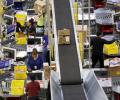
Flipkart and Myntra, together, post higher sales than Amazon

eBay says it has cut jobs at its centre in Bengaluru in favour of shifting them to other locations around the world.

We asked colleagues, present and past, to reflect on a man who has made such a difference to their lives and careers. Here it is then, a rich collection of memories that offer enchanting glimpses of the enigmatic Ajit Balakrishnan.

E-commerce player Meesho, backed by marquee investors like SoftBank Group and Meta Platforms, will look at an initial public offering (IPO) only in 2025, and till then, its focus will be on generating profits after tax and not just on being Ebitda (earnings before interest, tax, depreciation and amortisation)-positive, top sources in the company told Business Standard in New Delhi. In a clear shift of strategy, the company, which has reduced its cash burn by 85 per cent, is now looking to trim its annual revenue growth target to 40 per cent from the 100-plus per cent earlier. The sources, however, said even this level of growth was far higher than that of most e-commerce companies.
E-commerce companies are seeing an increase in demand for products such as fresh fruits and vegetables, milk, flour, rice, and lentils, and personal hygiene items like sanitisers and soaps and household cleaning products. Other products include instant noodles, baby food and Ayurvedic items. "There is even a huge spike in pet food," said a person.

Riding on e-commerce wave is the youngest state, which faces competition from neighbours.

Flipkart faces intense competition from larger global rival Amazon and local rival Snapdeal.

Morgan Stanley writing down its investment in the e-commerce leader by 27 per cent does not augur well for the sector.

Policy constraints may prevent many of the global retail giants from reaching their full potential.There are too many restrictions right now in the sector and policy makers lack clarity.

The guidelines say sellers will be solely responsible for warranties and guarantees.

Capital dumping is being used by foreign e-commerce firms to subsidise and engage in predatory pricing, oil-to-telecom conglomerate Reliance Industries (RIL) has told the Associated Chambers of Commerce and Industry of India (Assocham) in an internal document. The document alleges that this is leading to massive unemployment and financial distress among small merchants and kirana stores. It consists of various recommendations and proposed changes that deal with Press Note 2 of 2018 (PN 2), which RIL wanted Assocham to present to the government, according to sources.
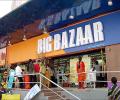
The big boys of India's traditional retail have finally come together to fight the onslaught of their online counterparts.

No one is disputing that the e-commerce market is growing dramatically in India

Having grown swiftly since the acquisition of Flipkart by Walmart in 2018, it was looking at a valuation of $10 billion. However, factors such as lack of diversification, new e-commerce and data policies, as well as the overall investment environment, have slowed the process.

Posting a 36-second long video on Instagram showing him flying a kite in Delhi, the world's richest man said, 'Any day is a good day when you get to fly a kite' and hash-tagged it #ThankYouIndia.

Home-grown mobile phone company Lava International has become the first Indian brand to launch 5G smartphones for domestic consumers. The smartphone launched under the brand name 'Agni' has been developed by Lava in India and is getting manufactured at its plant in Noida, Uttar Pradesh. "The purpose of launching Agni is to give Indian consumers the choice of a made in India 5G smartphone for Indians by an Indian company. "We wanted to establish before people that there can be an Indian brand which is technology oriented. "We are second in the world to launch a 5G smartphone on Mediatek Dimensity 810 chipset," Sunil Raina, president & business head, Lava International told PTI on the sidelines of the launch.

Besides growing tech and digital enhancements, the firms are ramping up the hiring of more delivery partners and reinforcing existing Covid protocols.

The 'buy-now, pay-later' (BNPL) juggernaut continued to roll on during the festive season with multiple players seeing disbursals grow by more than 100 per cent compared to Diwali last year. LazyPay, the BNPL platform of Prosus-owned payments major PayU, witnessed a credit demand increase of 300 per cent over the festive season last year, especially in segments like travel, food & beverages and entertainment. "We also saw an uptick of 70 per cent in user acquisition in the last two months.

'We went from zero to about 10 million users in three months. Paytm came out with the wallet play and we came out with the UPI play.'
E-commerce platform Snapdeal has filed preliminary documents with markets regulator Sebi to raise funds through an initial public offer (IPO), joining the league of internet-led businesses looking to list on domestic stock exchanges. The public issue comprises fresh issuance of equity shares worth Rs 1,250 crore and an offer for sale (OFS) of 3.07 crore equity shares, according to the draft red herring prospectus (DRHP). According to market sources, potential listing could value Snapdeal at about $1.5-1.7 billion.

Online biggies and global retail giants are working on being omnipresent in both the virtual and the real world to see what helps them get the numbers, says Karan Choudhury.

While e-commerce sites rush to meet mass demand, Etsy is positioning itself more as a community of artisans where buyers can seek uncommon and unique products rather than mass-produced discounted products.
